LEICA CAMERA - LUX
Translating 100 years of photography history in pixels
ROLE
Lead Designer
TIMELINE
2024-2025
TEAM
Sole designer, 3x Eng., 2 co-founders
THE PROBLEM
The Luxury Barrier
Leica has a "Red Dot" problem: it is perceived as elitist and analog in a world of instant, AI-driven photography. Our data showed that the mobile audience felt disconnected from the manual process.
There was also an adoption barrier: only 42% of users took a photo within the first 7 days of downloading the app. Users were intimidated by the manual learning curve and unaware of the app's full feature set.
The UX Debt: High cognitive load in manual mode.
The Business Leak: Users downloaded for the brand but left because they couldn't replicate the "Leica Look" instantly.
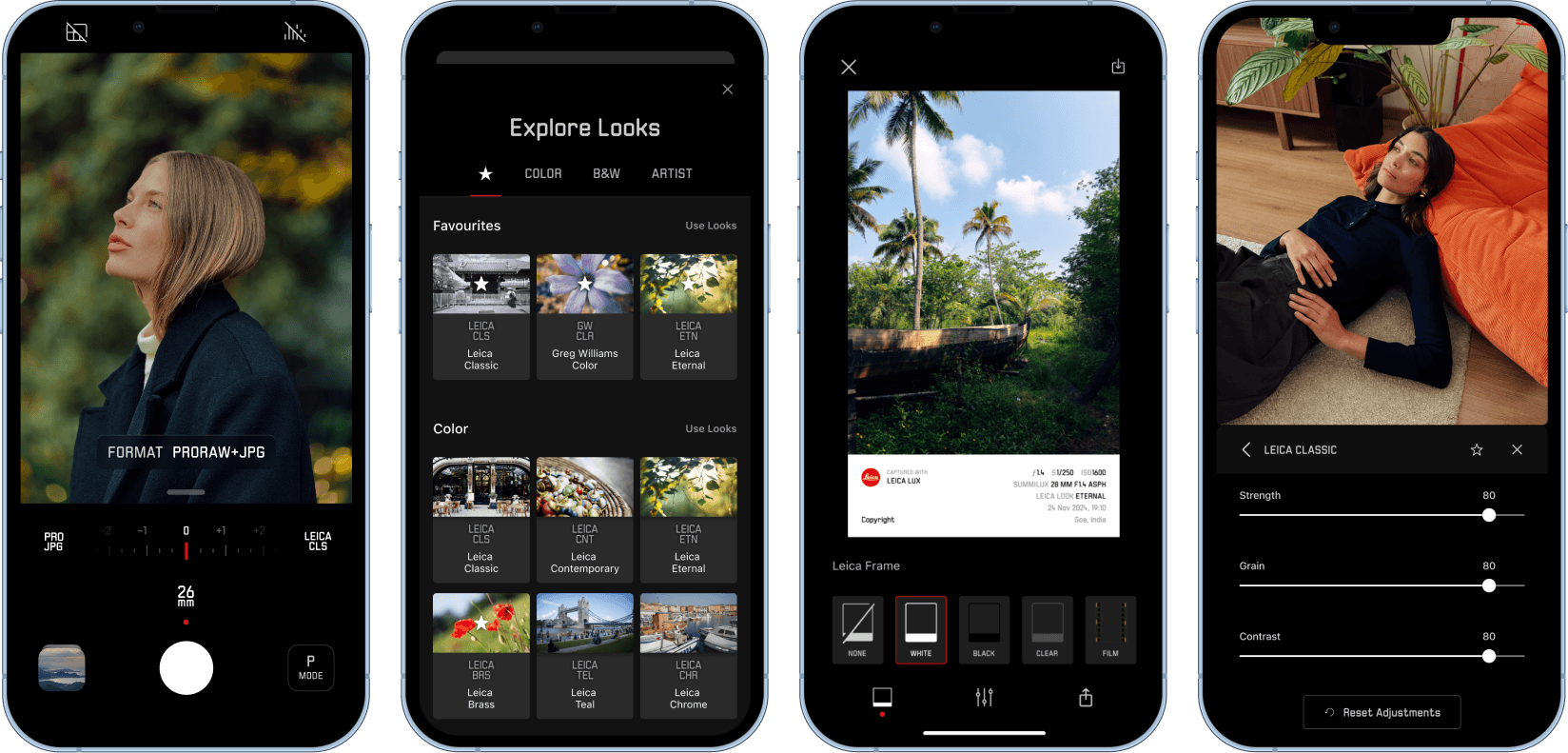
Homepage, Looks Gallery, Frames, Looks Adjustments
NORTH STAR
What does success look like?
THE VISION
Intentionality as a feature
I steered the product away from being a "utility" and toward being an "instructor" to bridge the gap between Leica's legacy and mobile convenience.
Interactive Onboarding: We implemented an interactive, animated onboarding flow designed to engage and train users immediately upon entry.
The "What's New" Narrative: To maintain engagement, I introduced a "What's New" feature to educate users on evolving features like the Leica LUX Grip.
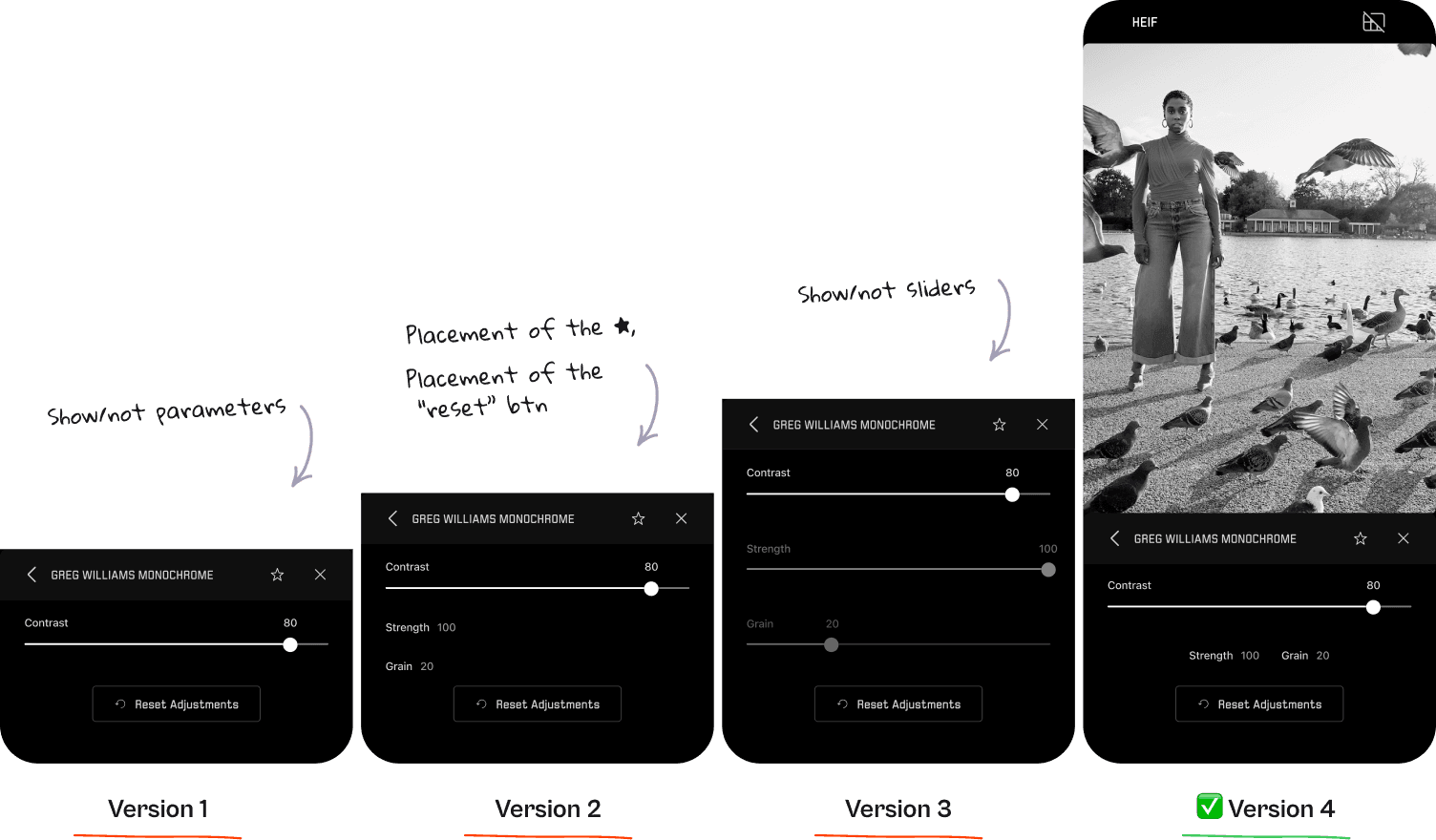
Iterative process reaching final design
"We aren't building a camera app. We are building a digital organ for the iPhone that happens to take photos".
APPROACH
Tactile Empathy
A true Leica experience is physical. I led the design integration for the Leica LUX and Fjorden Grips.
This required intense cross-functional collaboration on technical feasibility regarding firmware, OS updates, and Bluetooth stability.
The Physics of a Click: We optimized the "Select a Grip" journey to ensure the full connection process takes less than 15 seconds.
Ergonomic Mapping: We ensured the digital interface mirrored the physical ergonomics of Leica’s hardware legacy.
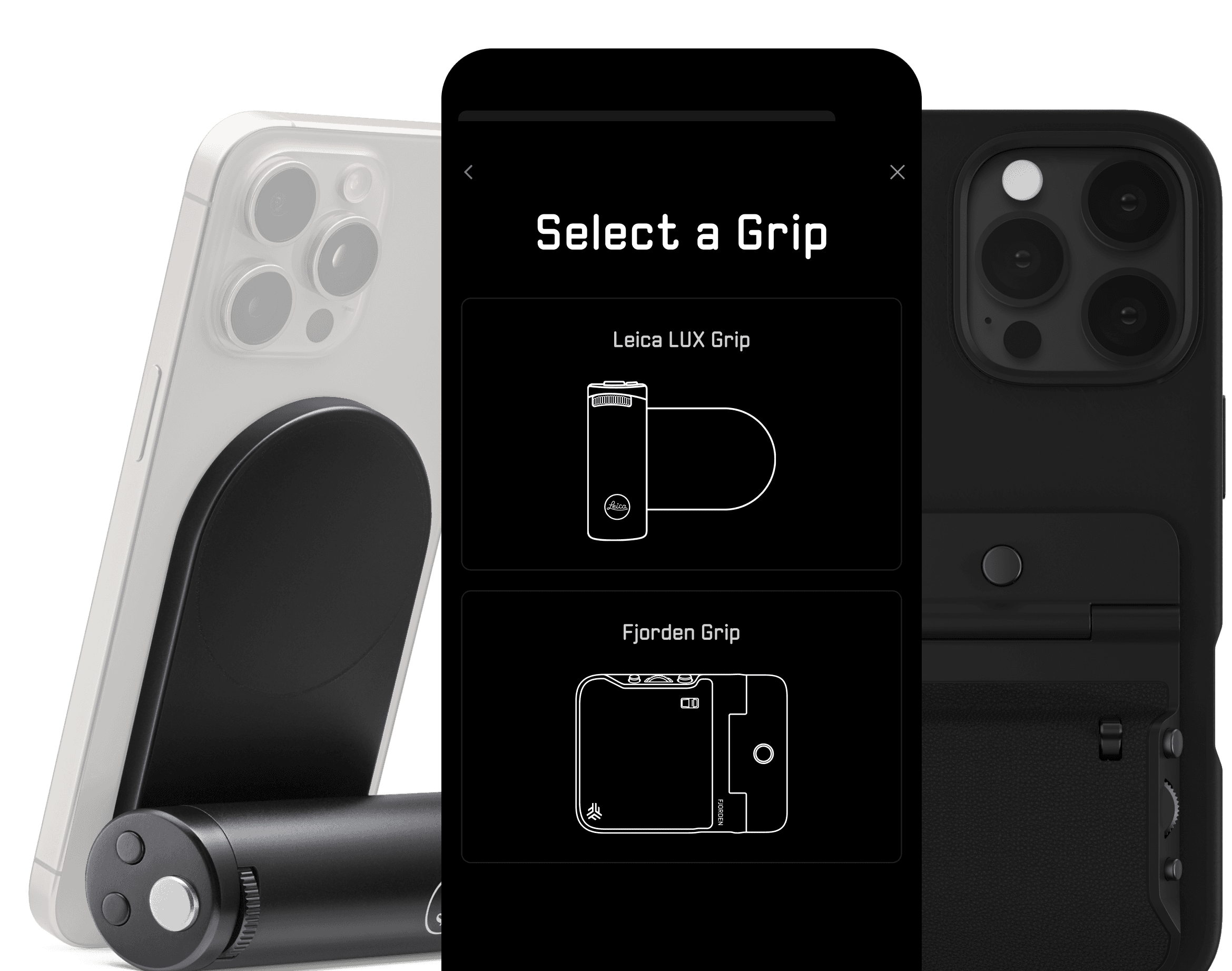
Leica LUX Grip and Fjorden Grip
BRAND PERCEPTION
Growth Design through Branded Pride
We faced a classic business conflict: How do we drive subscriptions without degrading the premium brand experience with "Upgrade Now" pop-ups?
The Solution: The Leica Frame. We allowed free users to access the legendary Leitz Lenses (Summilux, Noctilux) but applied a "Branded Frame" to their exports.
The Result: Users didn't see the watermark as a restriction; they saw it as a badge of honor. They shared their "Leica" photos on social media, increasing brand awareness while decreasing abandonment by 10.9%.

Applying and customising a Leica Frame
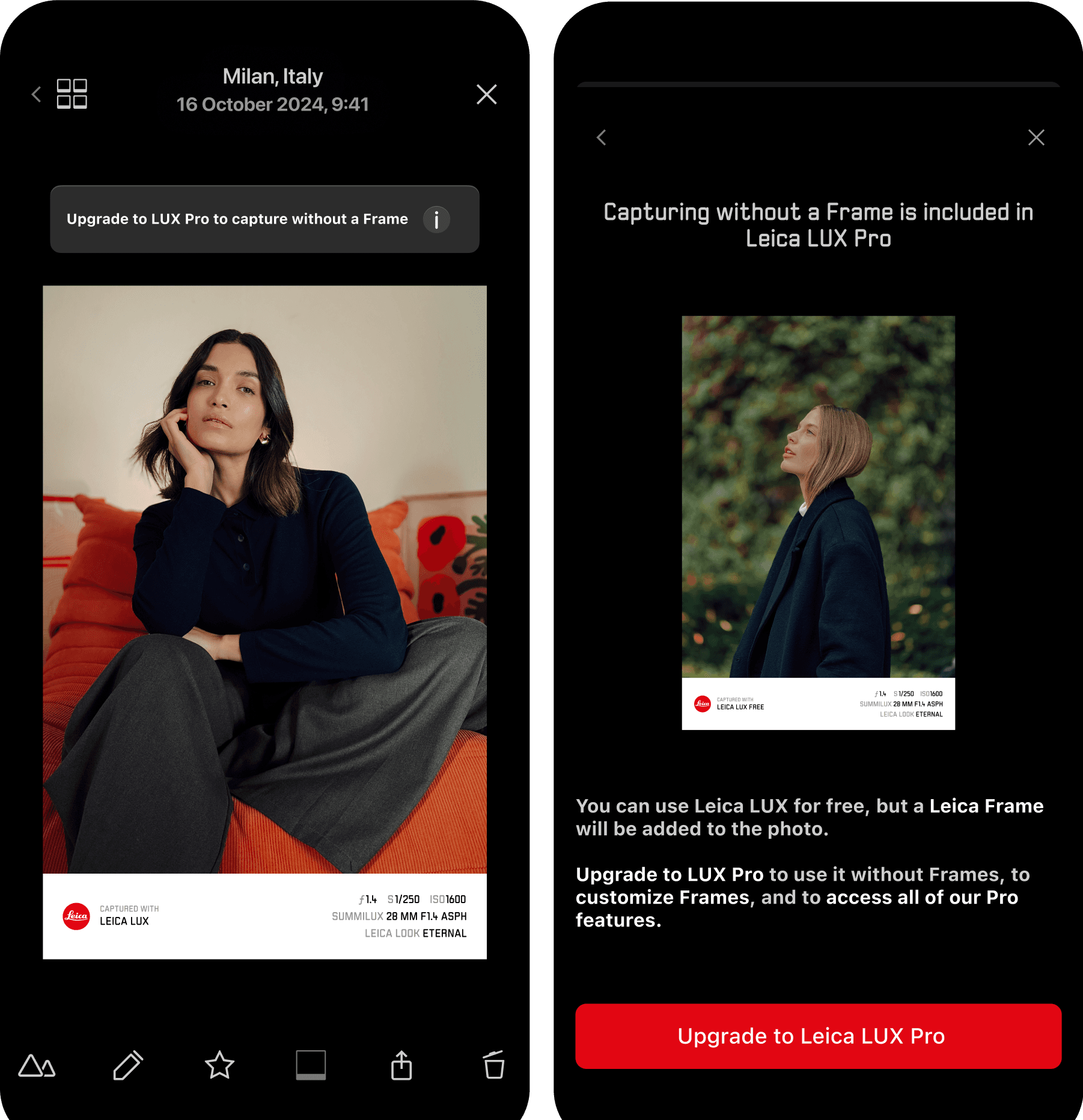
Exporting a photo with a Pro Leica Frame applied
"People really like showing off that red dot. This 'Status-Driven Growth' led to a spike in Pro activation within the first quarter."
FEATURE
Design by subtraction
Modern photo apps are a graveyard of sliders. For Leica LUX, I made a "unconventional" design call: No disabled states. > “A Leica user doesn't want to see what they can't do. They want to focus on the frame.
The "Reset" Intent: I strategically placed the "Reset Adjustments" button to encourage experimentation without cluttering the frame.
Smart Parameter Logic: We implemented "Show/not Sliders" logic. If a specific Leica Look doesn't allow for grain adjustment, we don't show a disabled slider. We show nothing.
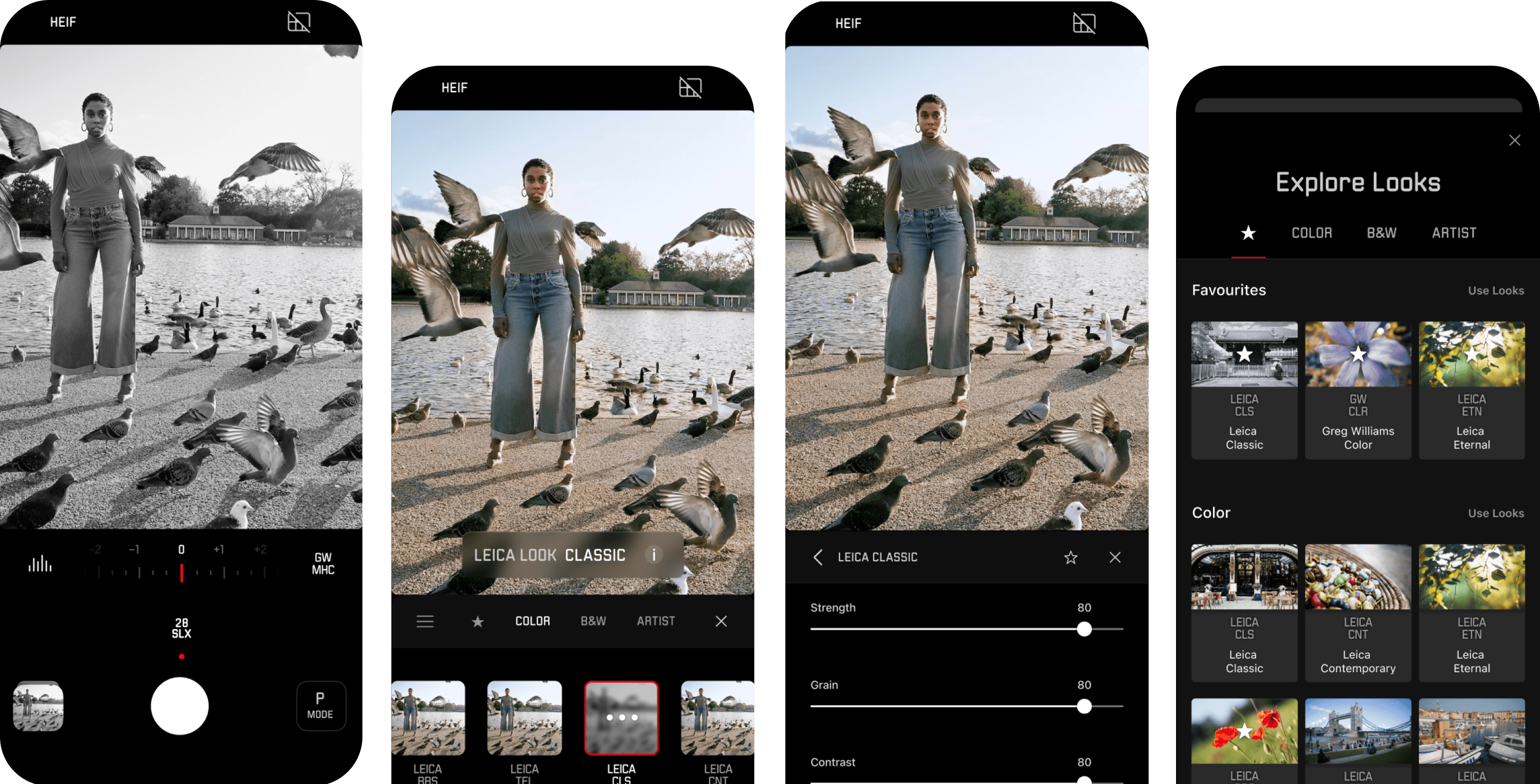
Leica Look slider adjustments
"We give the user more control by giving them fewer things to fiddle with."
BRAND PERCEPTION
Going beyond product: Quiet Luxury
I identified a critical Brand Gap: early content for advertising the LUX App felt generic and lacked the distinctive "Leica Look". To address this, I collaborated with external photographers and agencies, overseeing every aspect from model selection to colour profiles.
Goal: Produce high-fidelity imagery that felt like an aspirational luxury, triggering that "Red Dot" desire, while ensuring the app’s "Photo Essential" mode made achieving that result feel attainable for an amateur.
Click & drag to reveal: Before and after Art Direction
KEY TAKEAWAYS
Impact & Reflections
Engagement: +19% increase in photos taken within the first 7 days.
Growth: Free trial conversion rates rose by 1.18% in three months through strategic A/B testing of paywalls.
Recognition: Named Apple's App of the Day 2025 and reached a 4.8-star rating.
My takeaways: Scaling an icon like Leica LUX taught me that "Luxury" in digital design isn't about flashy UI. It’s about intentionality. A Lead Designer’s job is to make the user feel like every pixel was placed there for a reason.
My parents still use the default camera app, but you can't win them all.